


The maize silage season is in full swing across western France. Unlike last year, yields and quality are meeting expectations, which bodes well for strong herd performance in the coming year.
In this article, we take a closer look at how to successfully manage maize silage and why implementing a three-week dietary transition is essential to achieve productive, healthy herds!
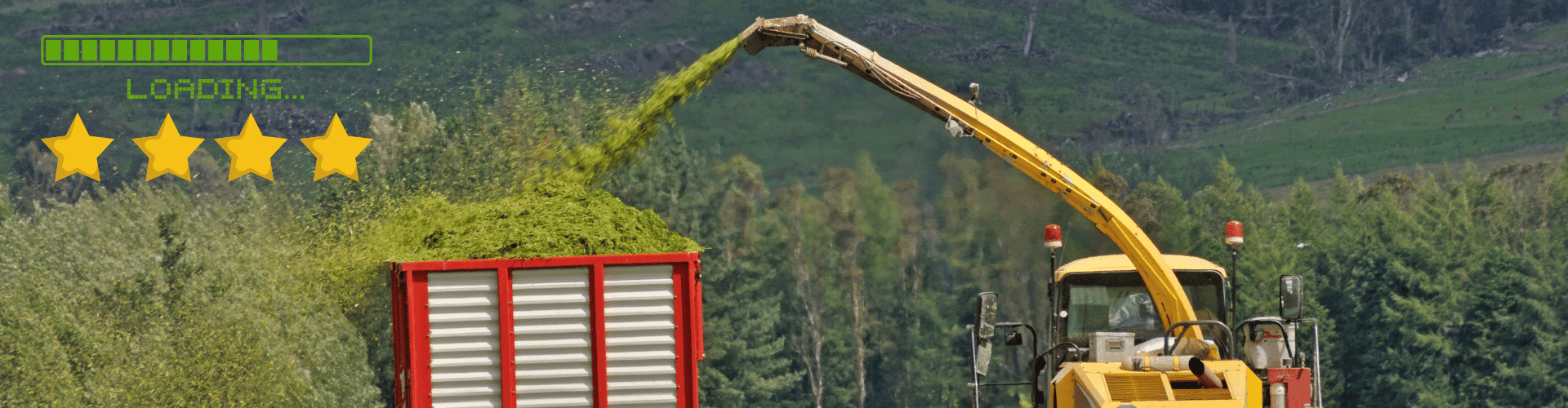
Maize silage: precautions to take during harvest and storage
Before discussing performance, let us first look at the precautions to be taken to minimise disturbances during this transition, starting with the harvest of maize intended for silage:
- Cutting height:
Below 20 cm, the stem is poorly or not digestible (highly lignified and often dry). Apart from fungi, nothing can truly valorise this fraction, and certainly not a ruminant rumen, as this part inevitably dilutes the nutritional value of the rest of the plant.
- Temperature at harvest:
When forage is harvested during periods of high temperatures, combined with the thermal inertia of the silo, it can take several weeks for the silage mass to cool down.
However, the more slowly the temperature decreases, the longer it takes for the bacteria responsible for lowering pH—and therefore for silage preservation—to establish, leaving favourable conditions for heterofermentative bacteria responsible for mould development.
- Compaction:
Proper compaction of the silo is essential. The less oxygen present inside, the more effective beneficial bacteria become. This follows the same principle as food preservation in an anaerobic (oxygen-free) environment.
Once harvesting operations are completed, it is essential to continue compacting for at least one additional hour, without attempting to level the surface with a fork. - Silo sealing:
As mentioned above, anaerobic conditions are crucial for optimal forage preservation. Modern plastic films provide excellent sealing performance, provided they are combined with proper weighting using sandbags evenly distributed along the sides, ends and across the length of the silo (approximately every 5 metres). - Opening:
Ideally, the silo should not be opened before three weeks after harvest.
Whenever possible, opening the silo three months after harvest is optimal, as preservation bacteria have had sufficient time to do their job and make silage nutrients more accessible and digestible for animals.
This is why “the true potential of maize silage harvested in September is reflected in the milk tank from mid-December onwards”.
Dietary transition: best practices to avoid digestive disturbances
Now that all these steps have been completed, distribution of the new harvest can begin. However, for the rumen, this represents a new ingredient that must be fully integrated.
Even if animals had previously consumed maize silage, this new harvest has different characteristics compared with the previous maize silage (cellulose, starch, protein content, degree of digestibility, microbial composition, etc.), to which rumen bacteria are not yet accustomed.
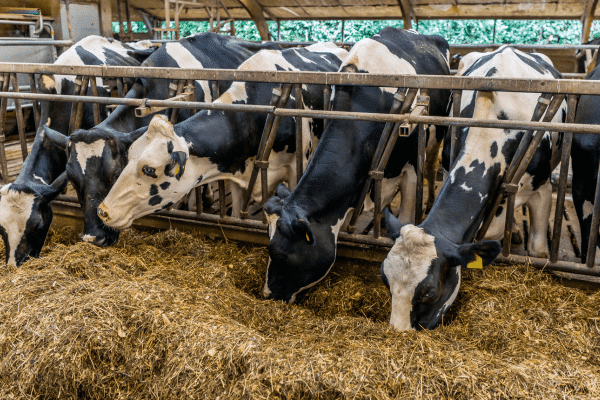
The dietary transition lasts three weeks
This is why a three-week transition period is required in order to avoid excessive disruption within the rumen, especially since maize silage represents a significant proportion of the ration.
Why?
Silage is a preservation method based on acidification, and the harvested plant is generally at an advanced stage of maturity. This results in a high oxidative load combined with a low pH, which the rumen must compensate for.
In summary, both the balance and the activity of the different rumen bacteria are disrupted by the characteristics of this new forage. The pronounced oxidation of a mature plant and its preservation through ensiling amplify its oxidative status.
Reducing oxidation is the key to a successful dietary transition!
VERTAL VALORIZ, designed to restore digestive balance in ruminants, helps counteract the cumulative depressive effects on the herd and on the activity of bacteria present in the rumen, as well as protozoa and archaea.
By limiting excessive pH fluctuations throughout digestion and promoting the development of a diverse range of beneficial bacterial families involved in ration degradation, you ensure a successful dietary transition.
The supply of antioxidants helps counterbalance the depressive effects of oxidative stress linked to the transition and protects the lining of the digestive tract.
In conclusion, 2023 provided high-quality forages that must be properly preserved and gradually incorporated into cattle rations. With VERTAL VALORIZ, you benefit from an additional, effective solution to secure this key transition period while maintaining herd productivity and health with complete peace of mind.
The maize silage season is in full swing across western France. Unlike last year, yields and quality are meeting expectations, which bodes well for strong herd performance in the coming year. In this article, we take a closer look at how to successfully manage maize silage and why implementing a three-week dietary transition is essential […]
...The maize silage season is in full swing across western France. Unlike last year, yields and quality are meeting expectations, which bodes well for strong herd performance in the coming year. In this article, we take a closer look at how to successfully manage maize silage and why implementing a three-week dietary transition is essential […]
...The maize silage season is in full swing across western France. Unlike last year, yields and quality are meeting expectations, which bodes well for strong herd performance in the coming year. In this article, we take a closer look at how to successfully manage maize silage and why implementing a three-week dietary transition is essential […]
...